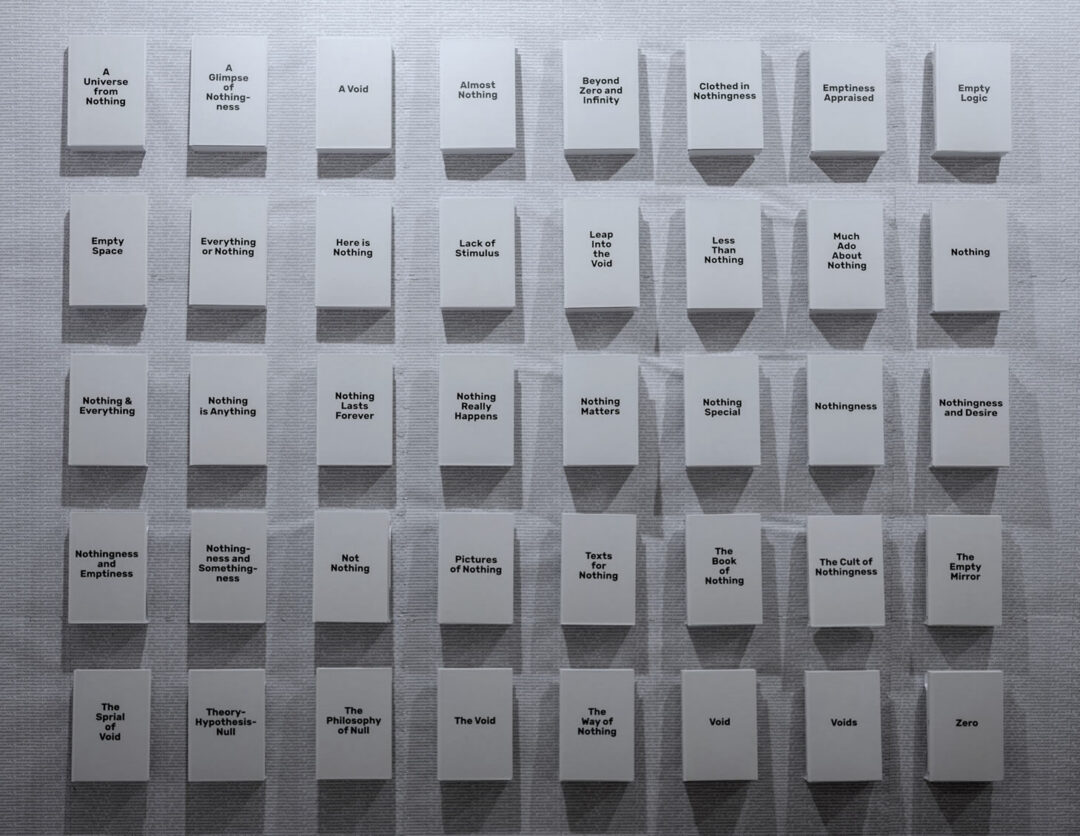
books about nothing
zero-degree representation, pure desire and the noise of the observer. a collection of totally empty books. the titles have been taken from actual books and reprinted without original content (text, pictures, design)
burning alive
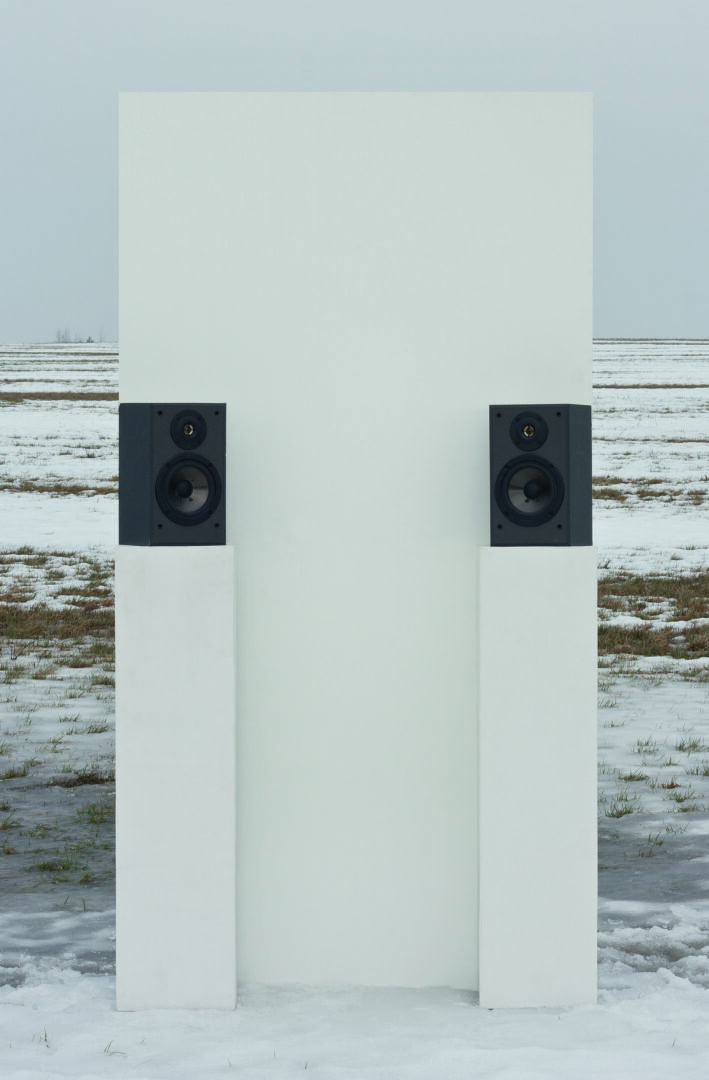
the infinite number of artworks
despite attempts by institutional critique, and its disciples, to demythify arts infrastructural and institutional procedures contemporary art remains wrapped in the popular imagination in codes and conspiracy theories: and the elevation of one artist or work over another considered an outcome of those codes and conspiracies. why else would singular artworks standout in a realm of oversupply, the sheer volume of artworks in circulation and their similitude. they hint at a marxian reading of the whole system – if all works are the same (just another number) some sort of fetishization or mythification has to be taking place to individuate, differentiate or over-value this or that “art work number 000001”
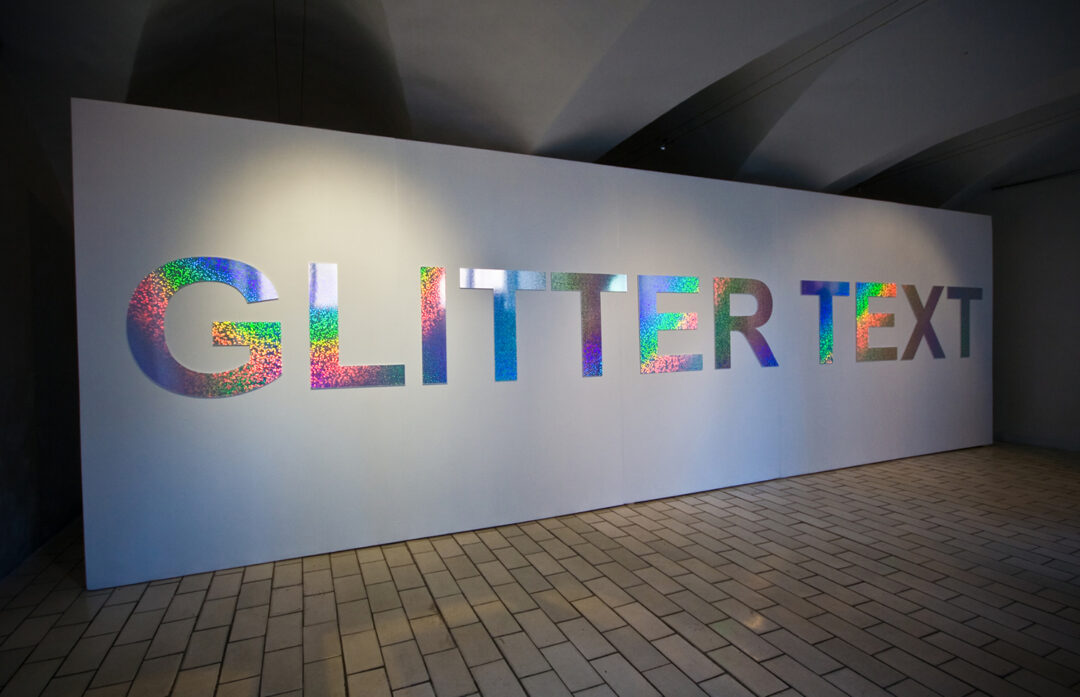
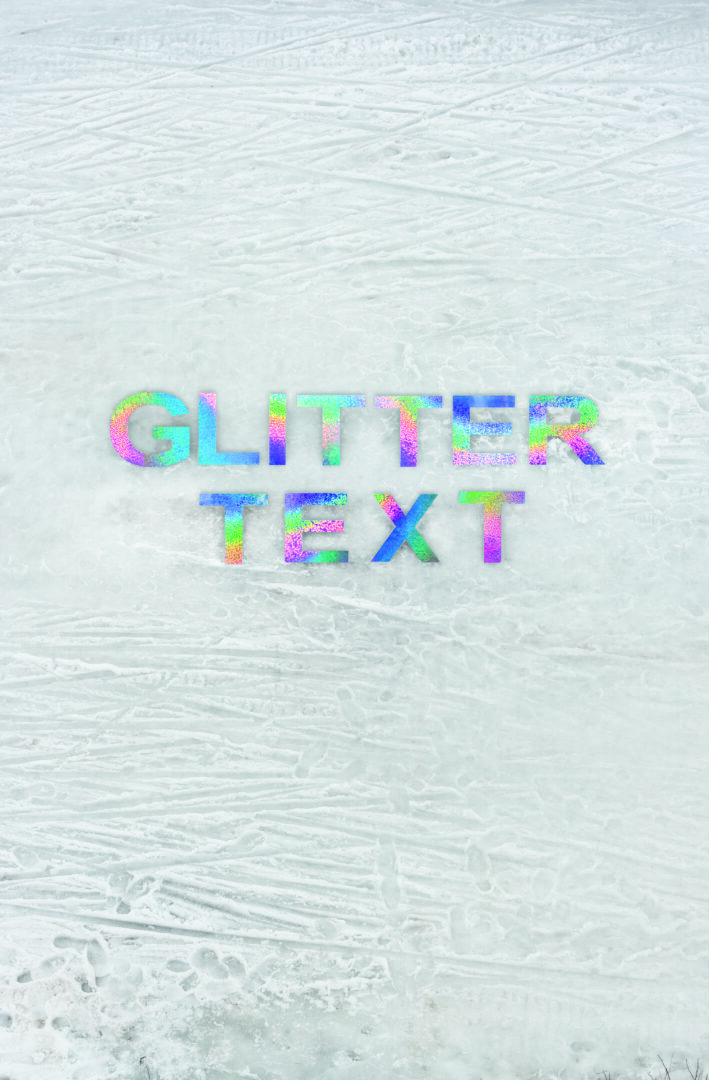
glitter text
“glitter text” refers, through laconic means, to a specific discourse that exists and dominates within our culture. the keywords relevant to this (cultural text) are: attraction, captivation, apocalyptic tone, spectacle, entertainment value, saturation, lightness, glamour, pleasure. the phrase “glitter text” sums up the demands of an affective desire-world, while at the same time functioning as a political empty signifier. it is an object of desire that, as a signifier, does not refer to its content, or rather turns the viewer’s desire, and the absence of its own form and content, into “content” itself – into meaning, into reality. it reveals the opposition between linguistic representation and the actual experience of a phenomenon, where the materiality of language or the timbre of speech itself plays itself out as a “special” phenomenon. it points emphatically to itself
does the text gain additional meaning if we change its color or material state? yes and no. typography, design, advertising, neon texts merely emphasize what they refer to; they do not reinforce the language system itself or make it more fundamental or complete. at the same time, glitter is above all a surface shimmer, the antithesis of fundamental and final solutions, more an aspiration toward an eternal disco. when visual consumption shifts to enjoying the effect of light reflected “from” the text, glitter becomes a tool for maximizing such a situation, so that “reading” collapses into the pleasure of consuming a fascinating visual perceptual experience. this is comparable to media consumption, where the object of fascination is not the representable phenomenon, nor even the representation itself, but the pattern of representations, the dynamics of their alternation. and the truth suggested by a narrative based on repetition. and as such, it is a privileged (consumer-tested) and complete language. it no longer offers new information but a sustained, self-saturating pleasure of consumption. the consumer, commissioner, and justifier of this text is an integral part of the text, just like the contentual absence at its center – an absence that is not disturbing like the void at the center of the lacanian subject, but a “ratified void” (cf. the so-called disco ball or media bubble). yet in the context of a completed language, it is crucial that the peculiarity of glitter lies in offering, depending on the light and the recipient’s position, a definitively variable kaleidoscopic effect that is always different within itself, and this circumstance is the only distinction separating it from the outside or from other language systems. the intensity of consuming a certain cultural text, unlike ordinary reading – where the focus is on the text as mediator – here becomes a greedy and impatiently passionate hyper-reading
narcissus and self-looping, the closed circuit of endless self-love, autopoiesis. the desire-machine as perpetuum mobile
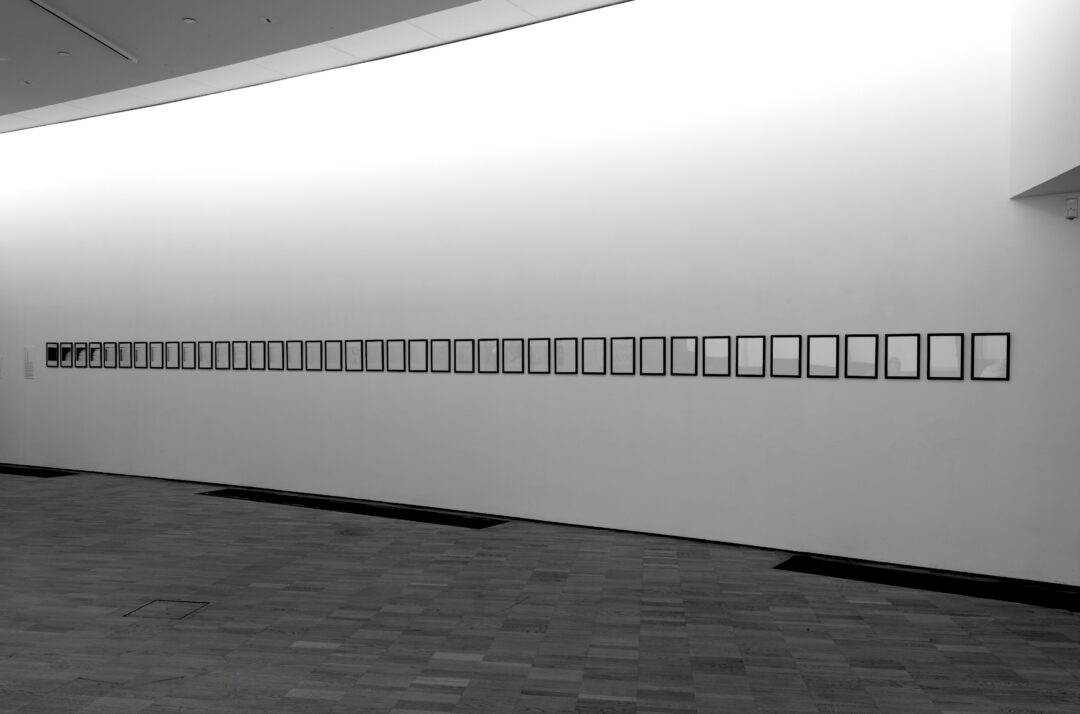
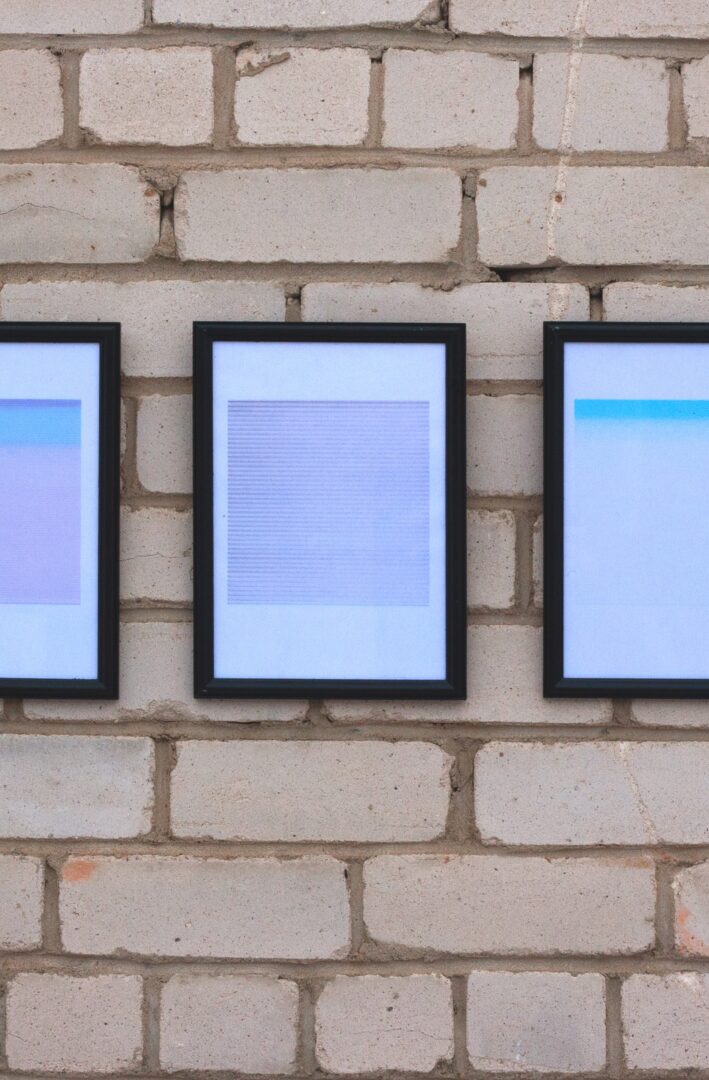
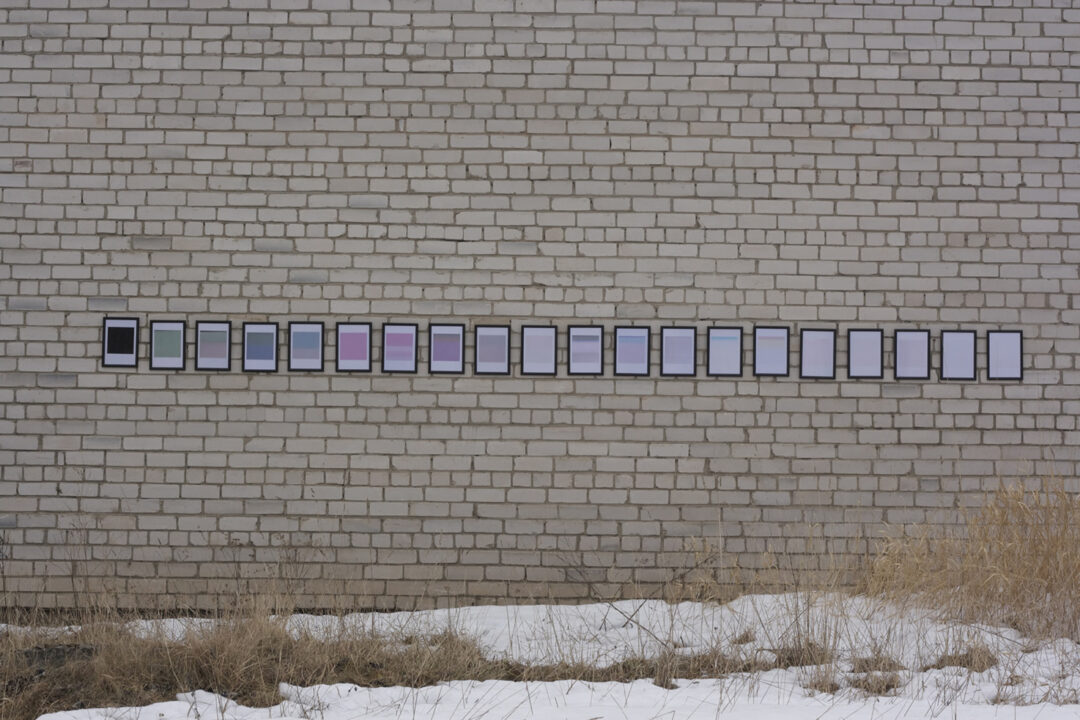
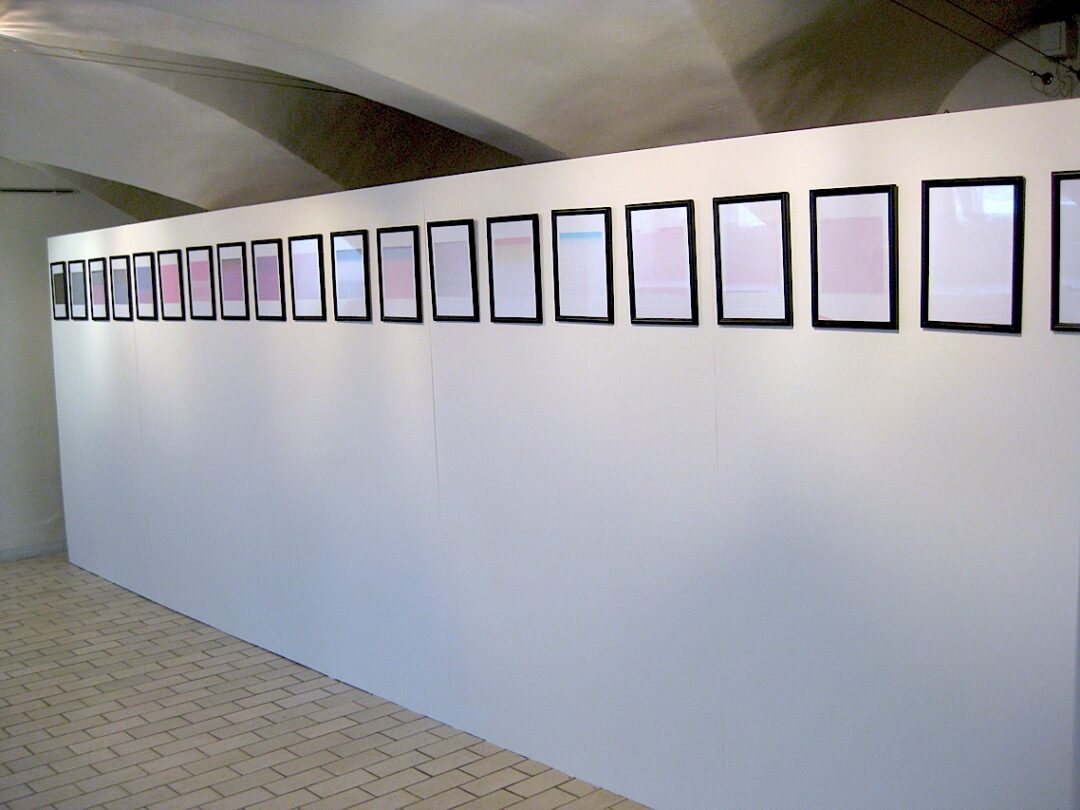
black square fade
1. 1/430
2. 23/430
3. 49/430
4. 67/430
5. 89/430
6. 107/430
7. 128/430
8. 142/430
9. 159/430
10. 178/430
11. 198/430
12. 216/430
13. 237/430
14. 252/430
15. 274/430
16. 289/430
17. 332/430
18. 369/430
19. 401/430
20. 430/430
printing hundreds and hundreds of A4 pages with black square fading into white is referring to operational exhaustion and the appearance of machine-made meta-aesthetics within a clearly limited “system preferences”. starting as almost like
a reversed hommage to Malevich the piece reveals the operational logic of printing machine emptying its cartridges and “trying to” make up to the full CMYK-black up to the point of absolute annihilation, up to the point when the empty printer is repeating the white square on a white A4 paper.
meanwhile, and this is the most important thing, the process is leading to a series of mutations on the way, mutations levelling out the interpretational overload of the black square and the white square „readable” form left to right, the sequence acts as a formally logical operation which is similar to a well-known zen-budist allegory „by the footsteps of an ox” where by following the ox your mind flows into emptiness. but this „emptiness”, this pre- and post-info state is an empirical fact derived from the inner possibilities of language itself, not a metaphysical speculation

loits (incantation)
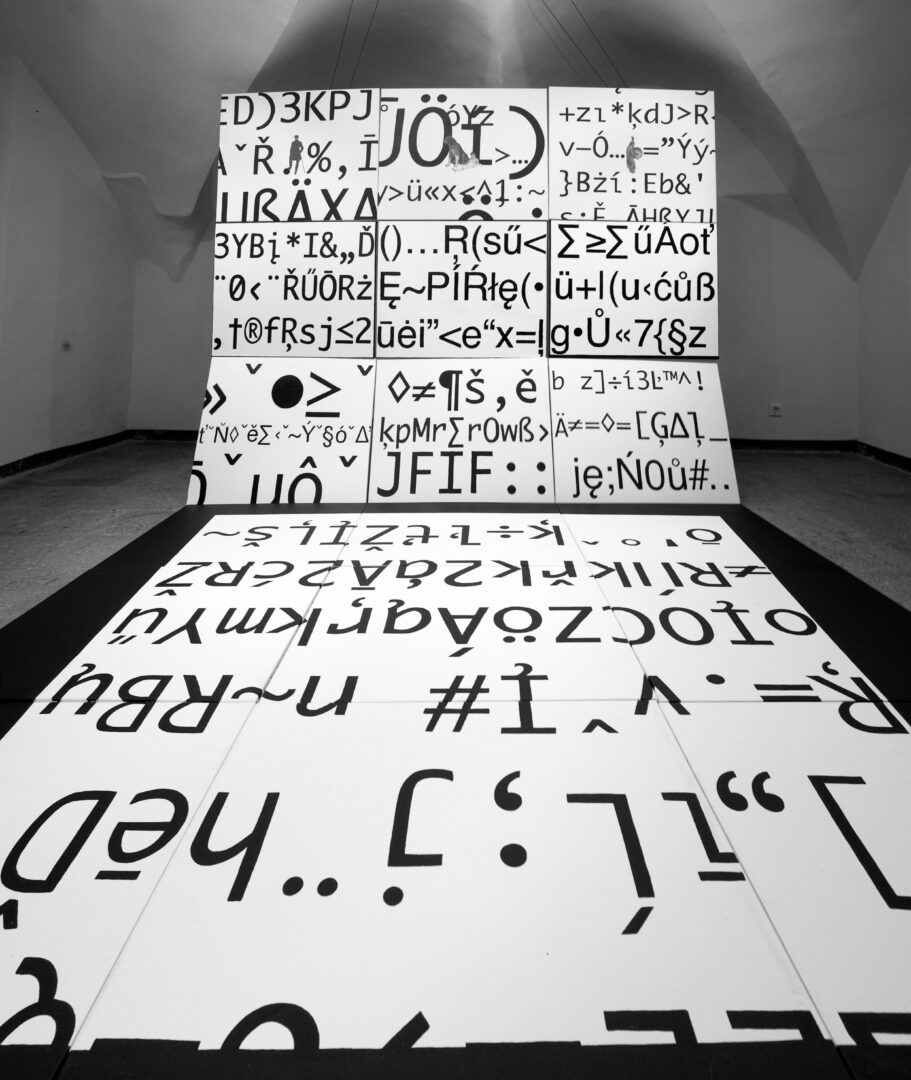
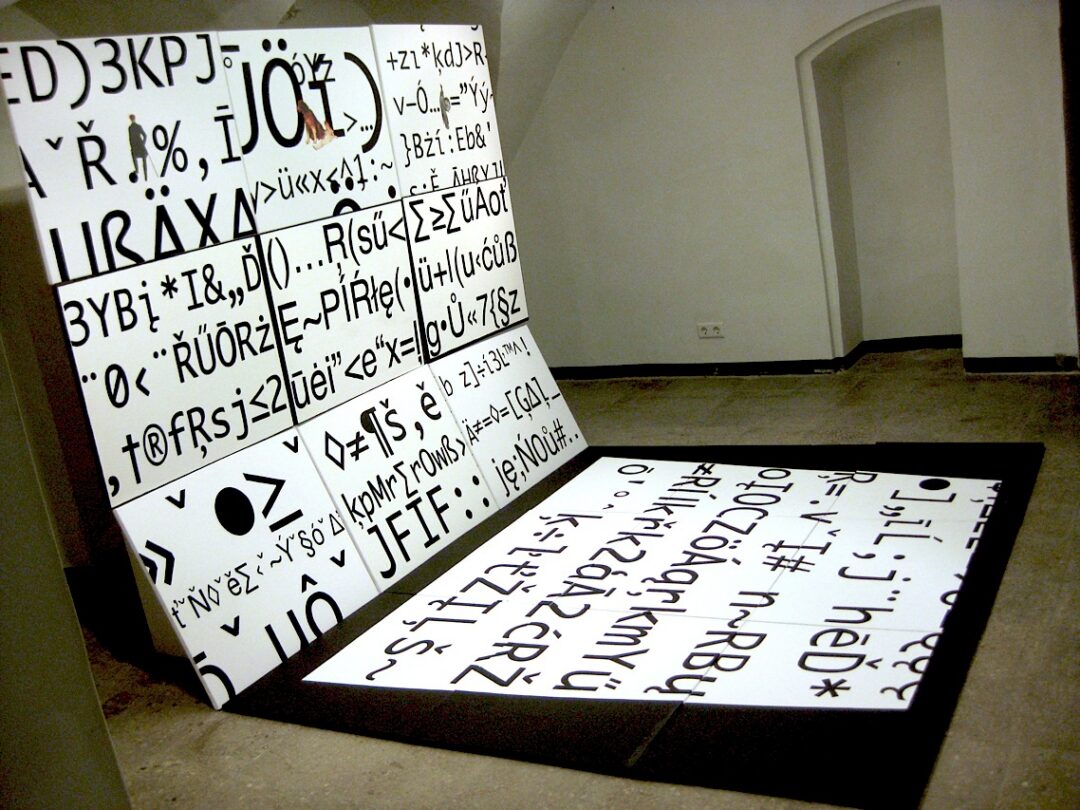
wall installation. silkscreen on canvas, 32 pcs, each 40×40 cm. the work is a graphic spell that lines up the words “mirror” and “in the mirror” (in estonian) both forwards and backwards, based on the principle that in the rows and columns no mutually mirrored pair repeats, while all possible combinations are exhausted. the visual text becomes a hypnotic chant in the viewer’s mind while looking and reading. a mirror in a mirror is an emblem of an illuminated mind, because there is nothing to reflect. it is a metaphor of force and spirit—“mirror in mirror” in its metaphysical sense means mind, but when the material words themselves begin to mirror each other, reading produces a chanting–incantatory poetic rhythm, a kind of force—a spatial mirror-labyrinth. thus the work is simultaneously a visual two-dimensional art installation, concrete poetry composed of words, and a sound work generated in the mind
wildlife documentaries
focus on the metaphysics of what is missing, of void, of blankness and of noise also clearly manifests itsself in series of text-pictures mis-converted from the photos of nature. the fundamental base for the paintings, are documentations of the wild nature – recordings of sound, videos and photos – these files which have been opened with text-redactor software. interpreting the photos and sounds as a text, the result is a text imbroglio, in a way – “the second nature”. the similiarity of the meaning of text imbroglio for both, the nature and the machine, depends on the way how the code is being read. photos opened as text files, show an interpreted image of aritmetical formulars and punctuation marks, which give a emotional richness of expression to random combinations. nature is almost as a letter that came before speech, semiosis, of what the registrizing consciousness
doesn’t take part
the documentations of wildlife converted into sound and text are raw data, a language meant for a machine. but how does it affect the human brain? the spontaneous reaction when confronting such stimuli is the habit to read associated meanings as a linear narrative, and at failure to do so the brain switches to a special mode. (an illiterate brain does not care if it is processing random stimuli or a text consisting of letters.) brain’s activity changes because different regions process text and picture. (due to the fact that every brain is individual and plastic, each person has different terms and meanings in a slightly different place, and the centres can move around during the person’s life within certain limits, for example in case of a trauma or a stroke (and certainly with experience, as new connections are made).
structure that consists of familiar elements but is organized chaotically directly affects neuron activity: the nervous system reacts with a specific cor- tical activity. the brain processes a sequence of random symbols/pattern differently from a text, where letters create meaningful units. signifiers that consist of pictography/symbols increase the engagement of the neuronal substrate: compared to processing an alphabetical language, additional regions in both hemispheres are activated.
this is corroborated by tests of reading chinese characters. when reading words written in latin alphabet, the brain converts each letter (grapheme) into a minimal sound unit (phoneme). when reading chinese characters, each symbol usually signifies a particular syllable and deriving the pronunciation and meaning presupposes the activation of a specific cognitive network.
linguistic units are the most common stimuli that induce synaesthesia, which is why chaotically presented sequences of graphemes and symbols have great potential in producing a resulting secondary modality perception experience. specific cortical regions and association areas between them are activated for each modality (sound, picture, text). it has been shown that spontaneous cross-modal interactions occur at the earliest stages of sensory cortical processing. the data visualization brings forth an amplification of cognitive processes and an increased sensory influx (also the so-called dormant potential that is not used in day-to-day situations), thus, an expansion of consciousness takes place, a movement towards the so-called “real” or holotropic experience
a shift takes place from a lexical level to a functional one. (actually, there is no lexical or semantic level, neither in the source text (nature), or the destination text (data), let alone a coherent narra- tive; and as such the translation is func- tional, conveying the meaninglessness of the source text through the destination text)
it is a meeting with phenomenological reality: processing the reality as well as the visual representation or imagination is mostly based on the same brain substrate (incl. retinotopically organised visual areas). same neuron populations activate in both, same processes and instincts start as in real life. however, it is critical to differentiate reality and imagination/picture to set the psychiatric norm. cases where the brain cannot differentiate the picture/imagi- nation from reality are considered psychoses: delusions, hallucinations and other derealisational experiences
perceiving three-dimensionality on two-dimensional photos is learned from experience and the brain processes it differently from a real stimulate. this is corroborated by tests with some tribal people, who had no experience with representations of objects on pictures, and they had trouble understanding spatial dimensions on 2d photos. visual picture, auditory stimulate and text/ textual symbols are processed in different regions of the brain, i.e. for each mo- dality the corresponding primary cortical region activates dominantly (primary visual region in the occipital lobe, auditory in the temporal lobe, etc.). there are also association areas between them and some things are processed more or less in parallel in different areas
the name of the used method is “functional misinterpretation”. there is a code we cannot read written in the natural forms. the similarity of the textual thicket significant to wilderness and just the machine is how the code is read — we see elements in both cases, which we believe to recognize (but the actual interrelations generally remain obscure), as we try to find a logic of codes we already know in there, to fit it into our experience and “translation machine”. arithmetical formulas start appearing to us from the nature photo translations opened as text files, punctuation marks that give emotional expression to random combinations, such as “b”e■)=x%?!” (just like meaning in nature is comes from visual or shape analogy)
there is more diversity in wilderness than there is in anthropocentric culture (determined choices, body configuration, fed in culture, language, be- havioural norms, evolutionary parameters, etc.). nature is like writing that precedes speech, semiosis, in which the consciousness that registers and accumulates experience does not participate. if the philosophy of language tries to get into the non-metaphysical thinking through deconstruction as a translation operation, then using the “functional misinterpretation” method (where the translation is only operating by rote — actually precision translation) rather gets us into chaos
when interpreting codes, meanings disappear and the lack of meaning appears. pleasure principle is the guide on the se- cret paths of the hauntology of mean- inglessness: the emphasised lacking in itself is a metanarrative with great meaning-creative potential. using or experiencing something, that is hermetic through and through and irreducible to understanding, is an irreplaceable experience. it is an acom- municativity which cannot be placed to the matrixes of understanding in the mind that (paradoxically) creates dis- course. thus we hope that the recipients will also connect with the wildlife instal- lation and perceive it as wilderness. feel the jungle vibe, baby!
code & cosmos
the spatial installation “code and cosmos” is based on the synergy of sound and light. in the room sits a small planetary system—glow-from-within globes
raw code has been transferred onto the globes, based on photos of various planets that have been converted into code. the aim is not to imitate our solar system but to create a fiction or model of an independent planetary system
textual noise, or raw code, points to the potential to contain all other possible languages and codes. the planetary system as a model instills a kind of big picture
key themes are the unknown, multiplicity, co-thinking. on one hand, it is about surpassing language, it is like a beautiful fabric with many gaps; on the other hand, you treat every character with care, like a beetle that has fallen on its back. at the same time, language has gained too much power and obstructs an adequate description of the world, so one must turn toward perception, where prejudice-free sensing and two-sided experiencing are essential
the sound installation is 8-channel, for an 8-voice virtual “choir” that represents empty code caught looping at the end of the world. the voices are whispers in a non-existent abstract language, read by opera singer Maria Listra. the voices span the audible spectrum from lowest to highest. the installation has 8 speakers around the listener, and a spatial pattern effect emerges in the center of the room


translate server error
pause
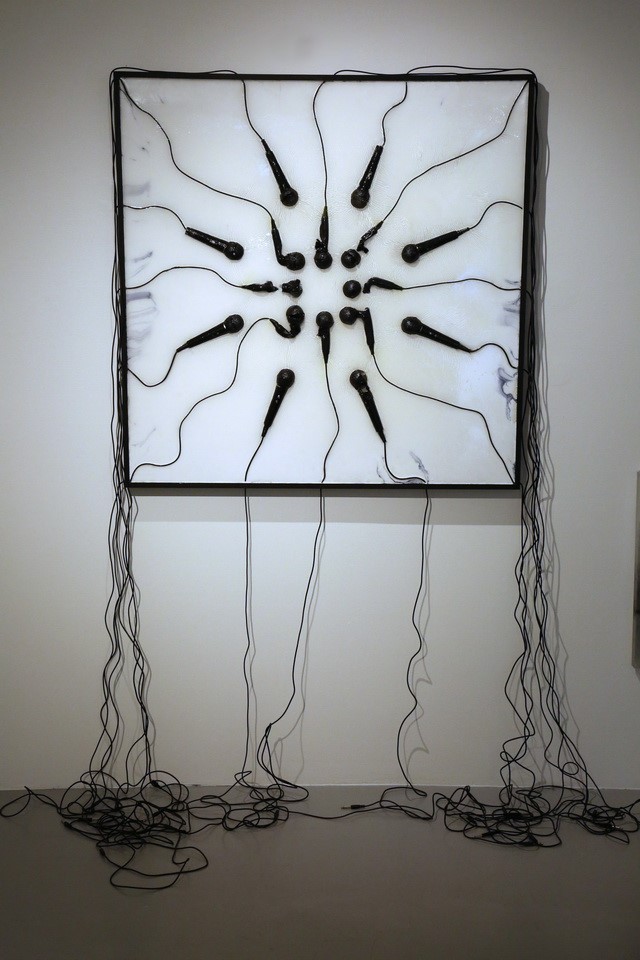
microphones move toward the silence held in pause
they are arranged concentrically, as if the object of their desire were at the very center—the zero-point of wishes and perceptions in the core of silence
they reach like living creatures toward the silence and sear as victims in its excess
they have frozen at the moment of self-sacrifice, at the exhaustion of their function, where the actual event (acoustic sound, or in this case its absence) and its image (the conversion of sound into an electrical signal) have become one
since 2014, kiwa has used the burning microphone as a motif, making performances, sound recordings, and an audio-video installation with it. in creating the “pause,” a sound installation without sound, the microphones destroyed in previous actions are given a new life

motorgirls is performing for you
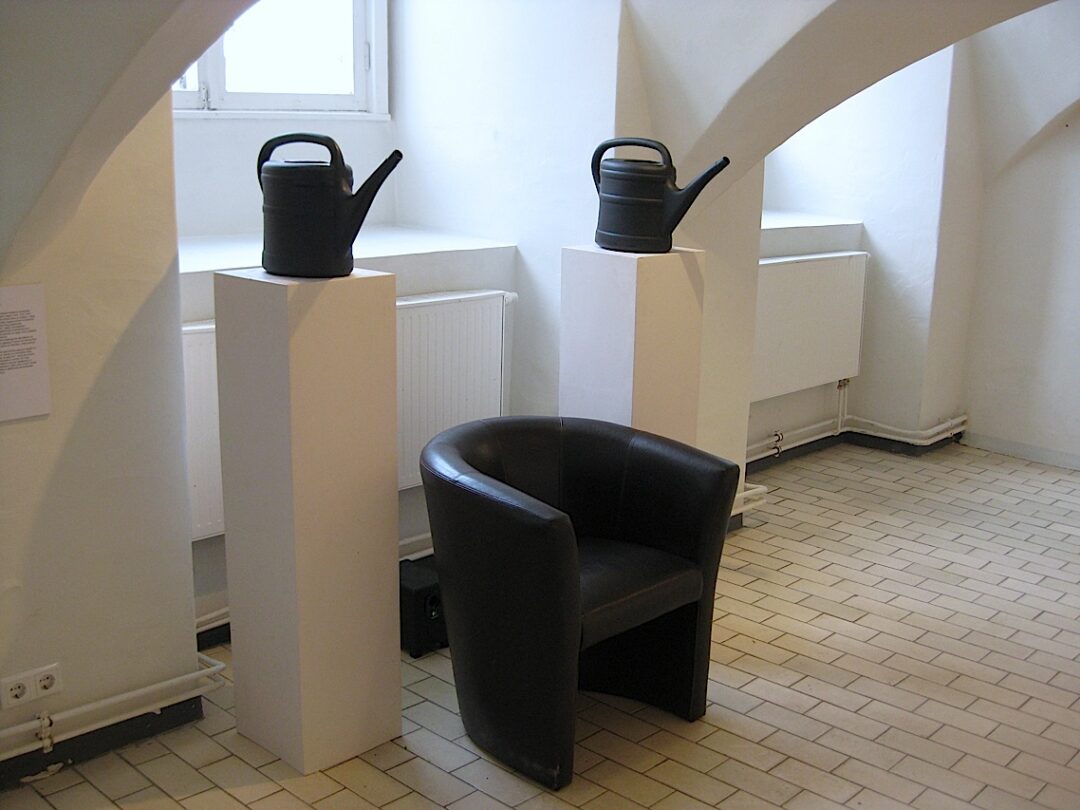
the installation consists of two (or more) watering cans painted black and placed on pedestals. there is white noise coming from the cans
white noise is a type of sound thats frequency spectrum in the frequency band is constant and homogeneous, meaning that for every hertz in the band the power of the sound is a constant quantity. this kind of sound is achieved by placing small radio receivers into the watering cans set to play a homogeneous susurrus
in principle the installation is not focusing on any kind of special acoustic or sound-generative themes: there is no connection between the elements and the meaning of the work, rather the emphasis lies on surrealistic and subconcious associations
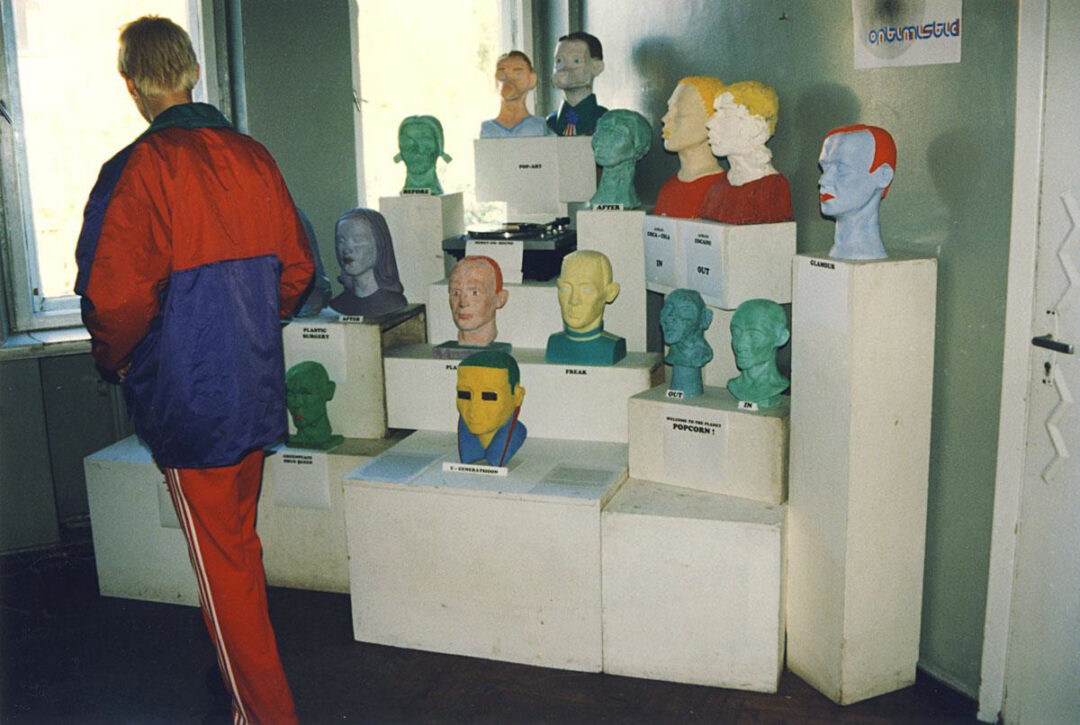
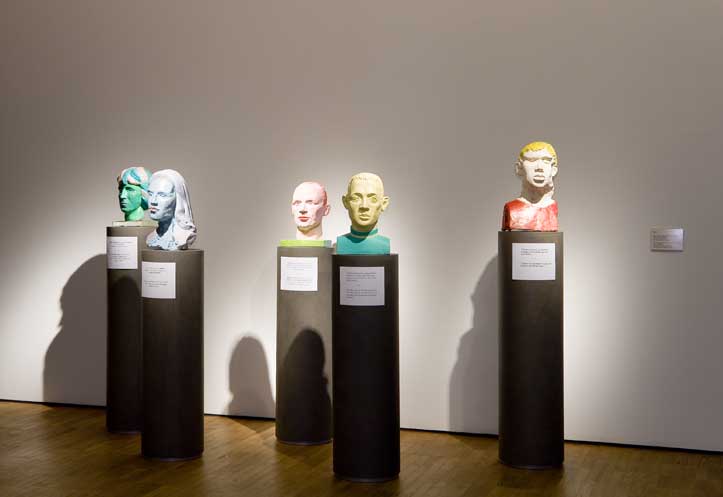
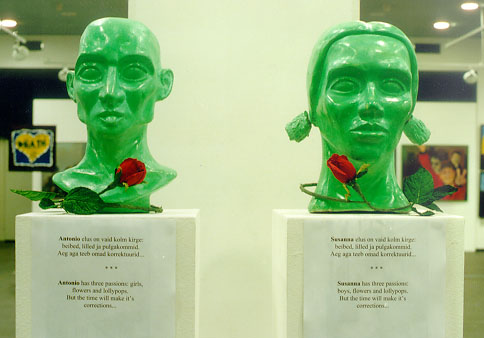
lollipop fiction (aka kings of pop)
the series of fictitious painted gypsum portraits was shown in the exhibition Lollipop Fiction (1996) with Esta Frosch and Tõnis Aaliste in the Obu Gallery, Tartu. Undoubtedly the strongest trump for this generation of artists that came into the field during the second wave of estonian neo pop art, is the fact that the references in their work did not stem from pop art but from every day popular culture: parties, brands, clothing, poses, and consumer habits. therefore they addressed the audience in a totally different way and also had subcultures involved. house music vinyls, d’js, three stripes of adidas and some stripes of speed, synthetic taste and the face magazine are the background kiwa used to create his samples. these works are memorabilia that were created as by-products of his life-style, consisted of a series of portraits, realized with expressive carelessness, of people the viewer thought s/he could recognise in the crowd at an opening party. all characters are “labelled” with their own stereotypical story so that they become everyone and again no-one. the text under one of the “portraits” reads: “Eerik likes to go to dance parties, but in real life, everything does not run as smoothly as in song lyrics. this is where it becomes intriguing…” these works do not seem to refer to “Elvis is the King of Pop” but some loser from the side-street. the King of Pop is a consumer: there is no fascination
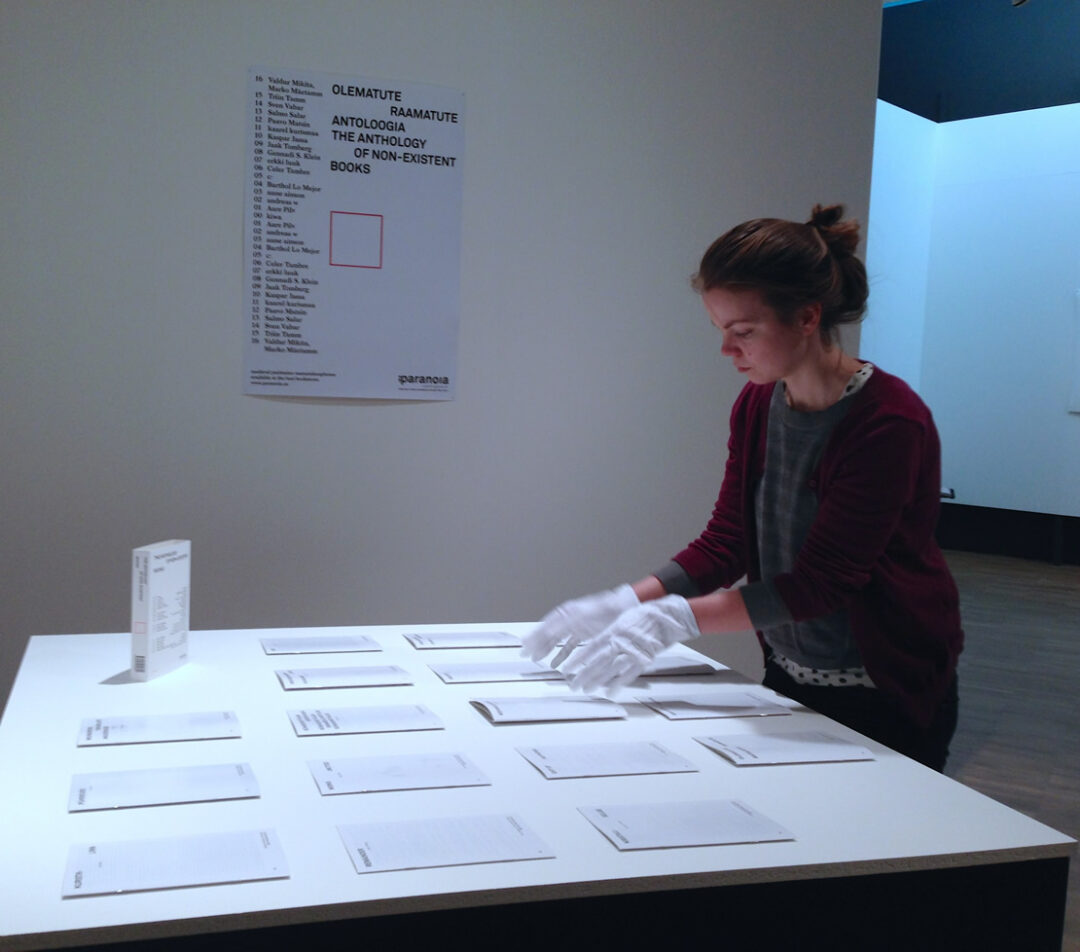
The Anthology of Non-Existent Books
installation view at Tallinn Print Triennale
while fiction-in-fiction as a literary technique is totally dependent on the context, this book skips over the frame story phase with a technical solution: the context for the non-existent books is the real world, instead of books. the anthology consists of seventeen original bilangual estonian-english experimental booklets by eighteen different authors, approaching from their own angle the endlessly variable motive of non-existent books
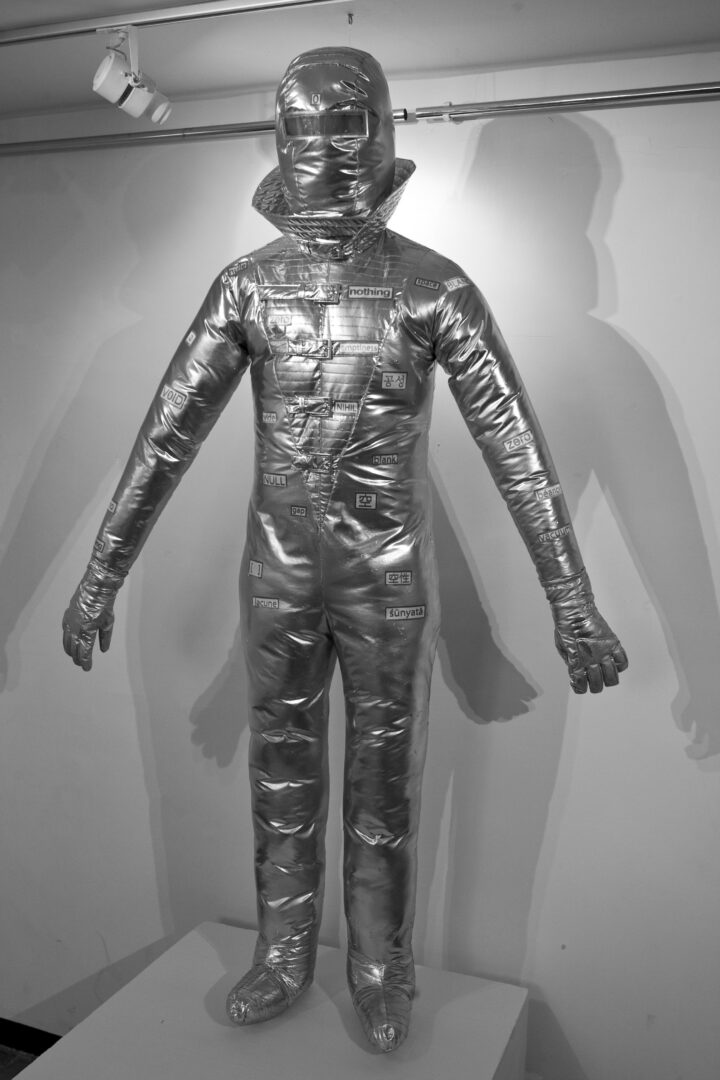
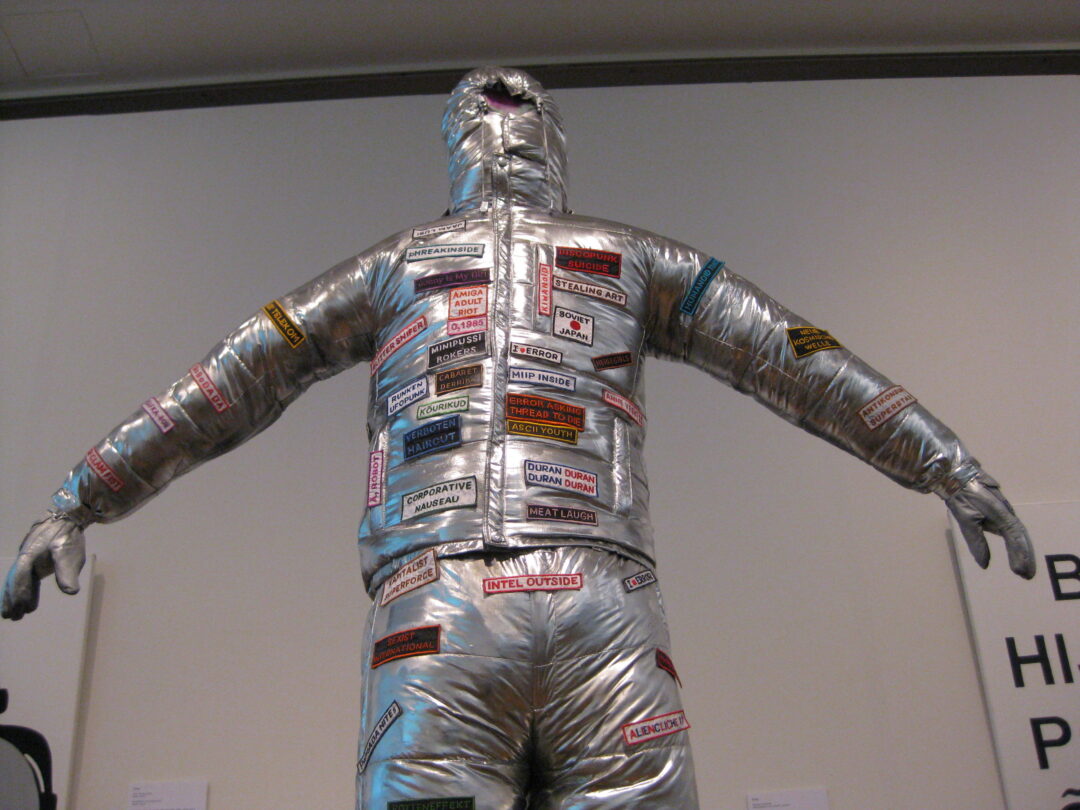
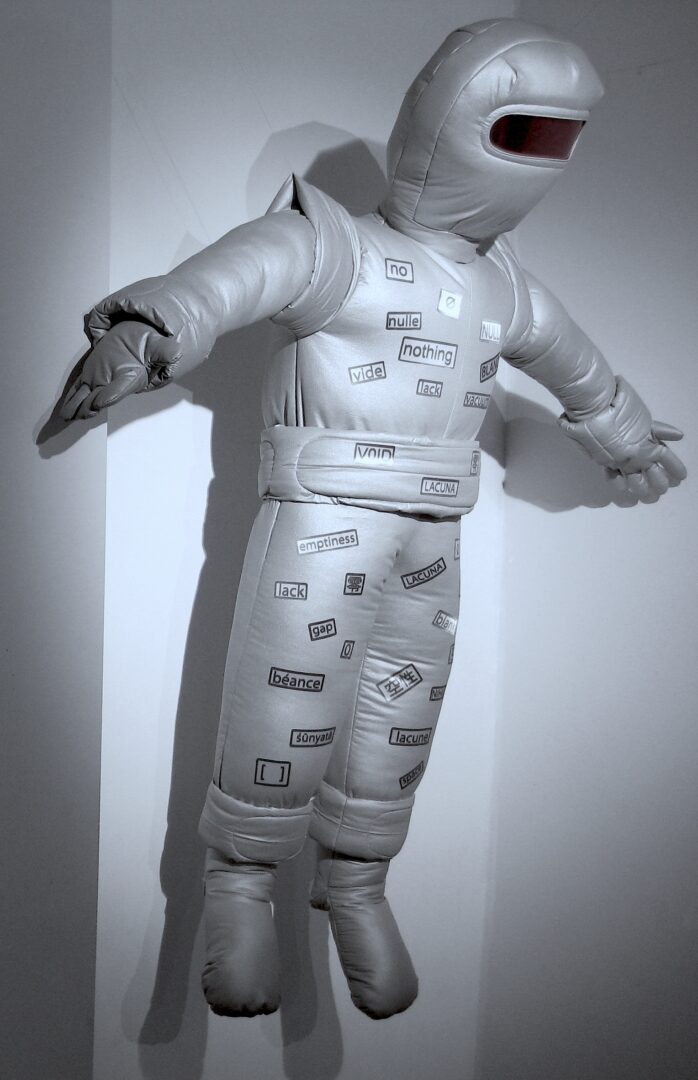
n0-n0-naut
the spaceperson is afloat, his suit speckled with names of nonexistent b(r)ands, each of which constitutes a wormhole to an absent pseudosubcultural space. step into the words
b(r)and names are a set of suitable textualization forms that imitate the subcultural code and bring forth a chain of confusing pseudo-recognitions.
every non-existent band reduced to a single keyword or a combination of two keywords is a potentially possible world
card and code
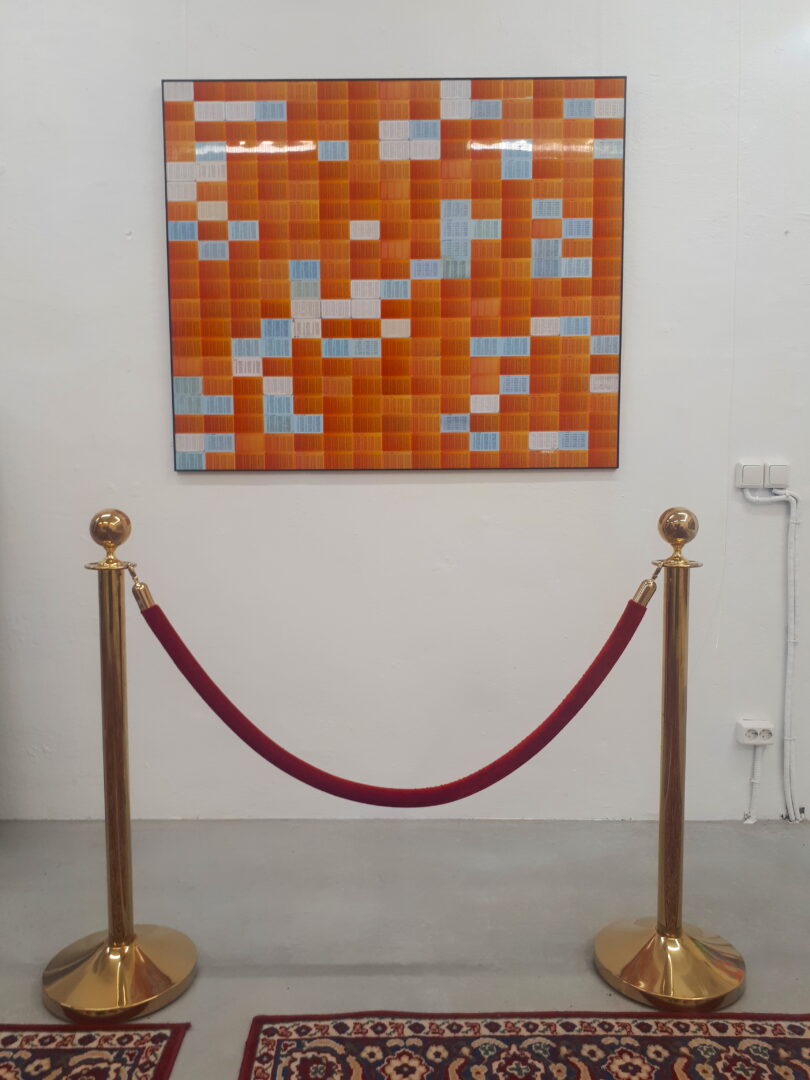
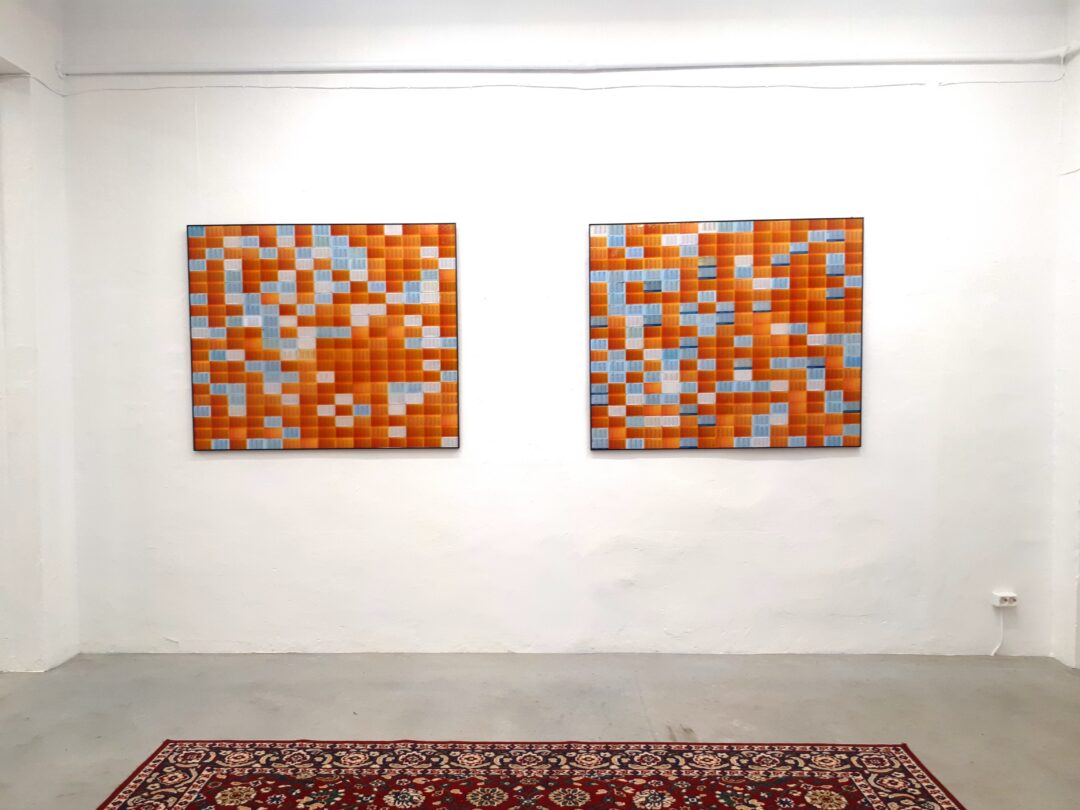
“card and code” examines the relationship between the plastic card and the numerical code, transforming a former tool of electronic access into visual and conceptual material. the work consists of 300 code cards containing over 10,000 numbers and approximately 65,000 individual numeric elements. here, code functions as a primary structure and a secret language — a deep code to which all other information attaches. once the card’s original function is removed, the numeric sequence emerges as an autonomous sign system that shifts from utilitarian use to a poetic form. “card and code” points to the intersection of language, system, and materiality, where information carriers become meaningful only when their function is neutralized and what remains is pure code in its visual and semiotic autonomy
;paranoia publishing
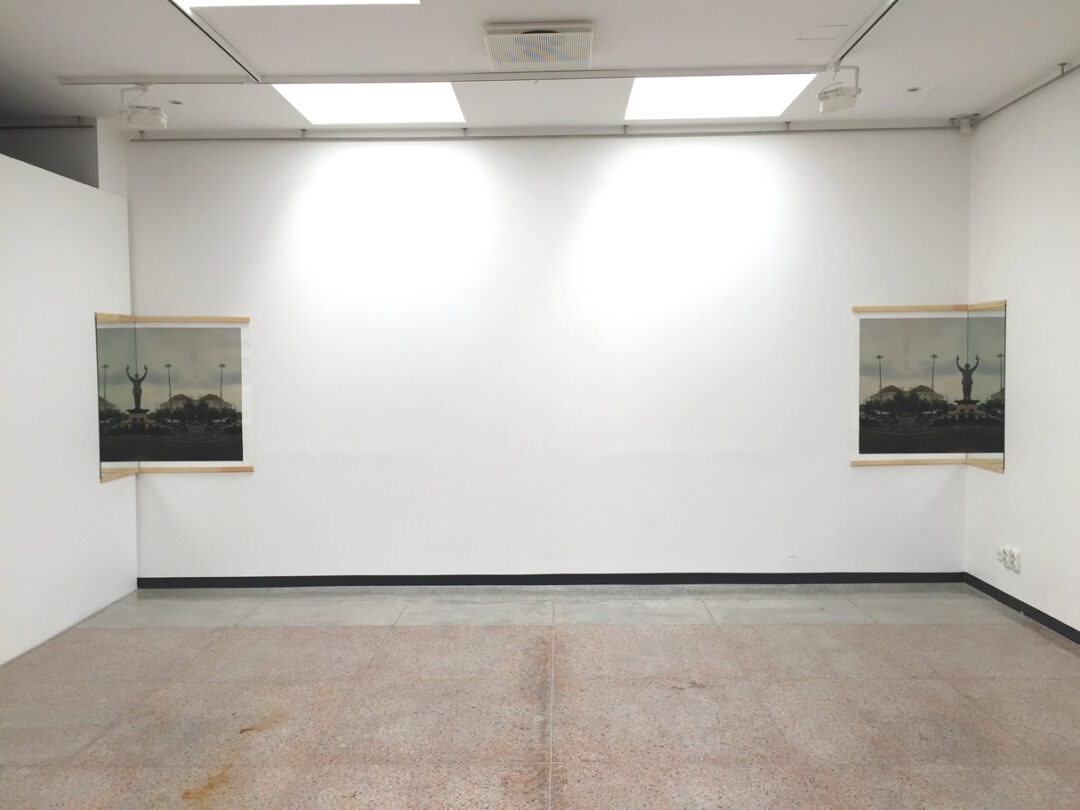
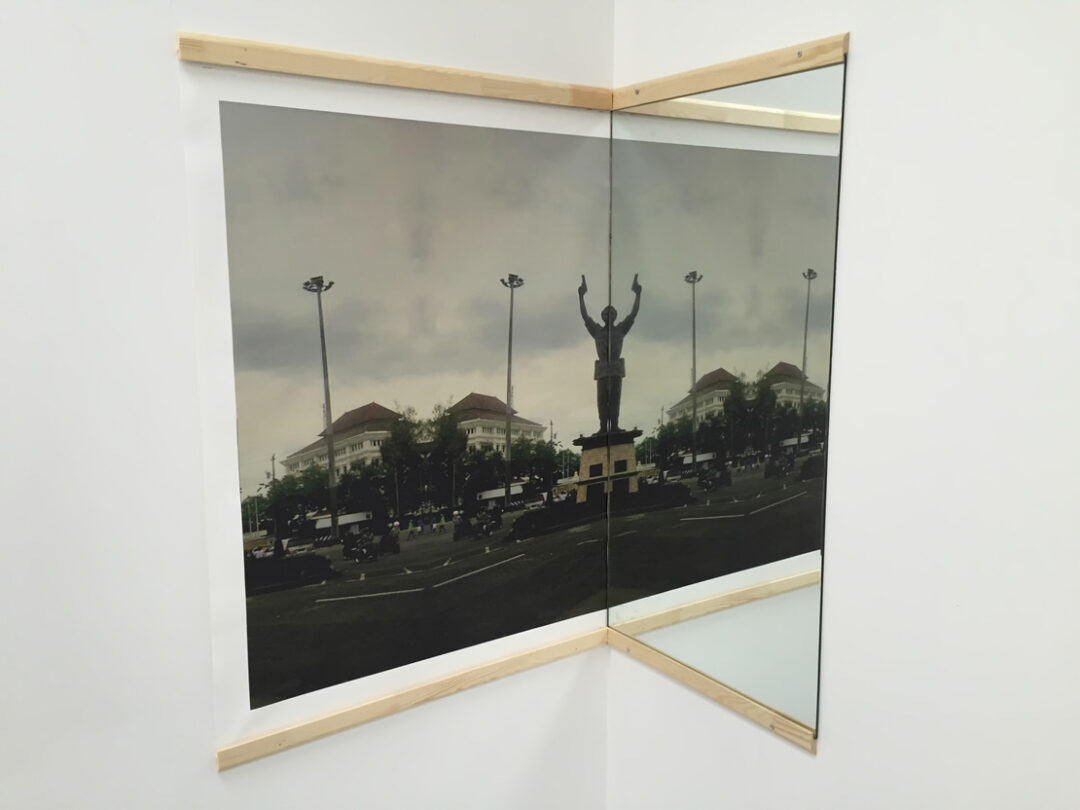
using mirrors in power games
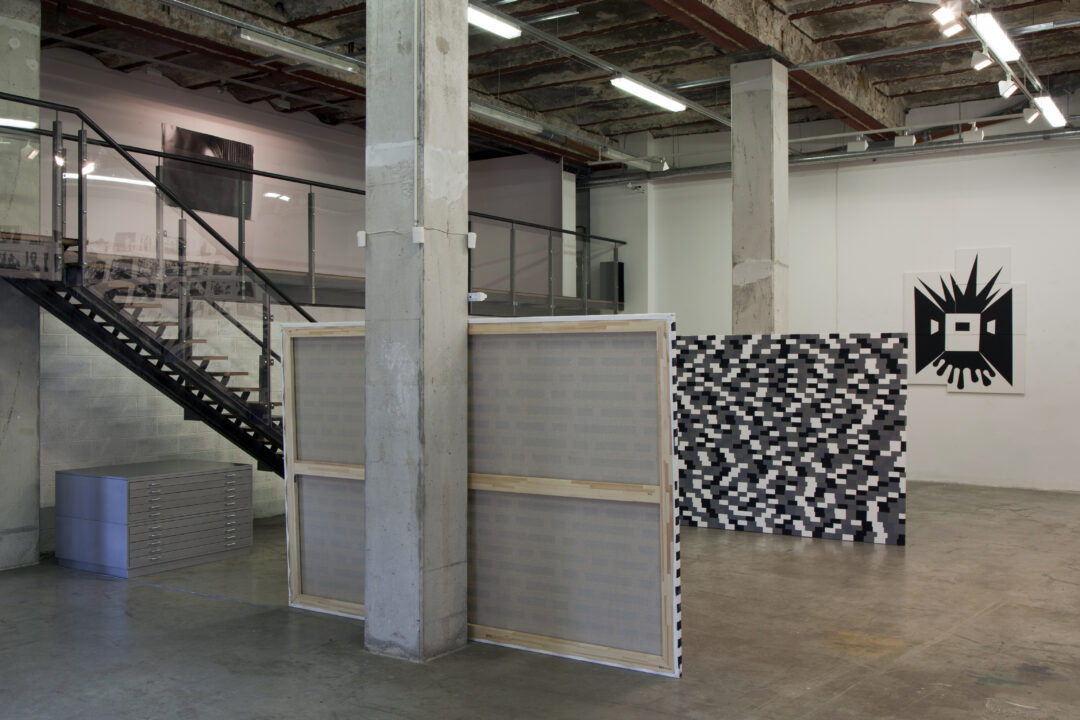
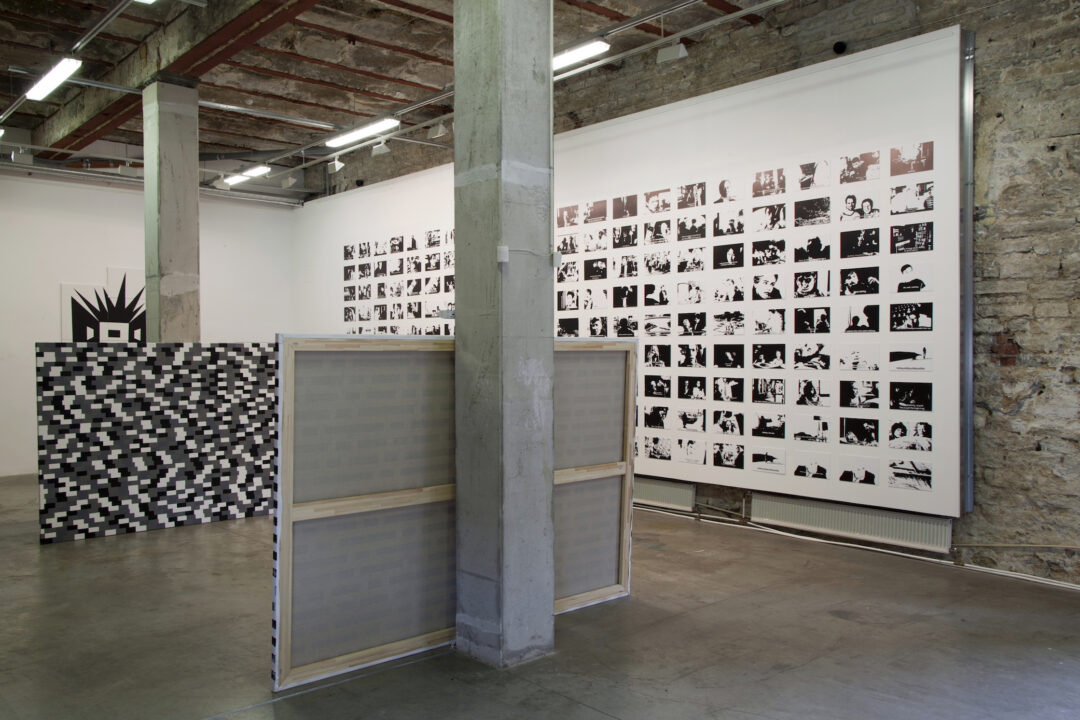
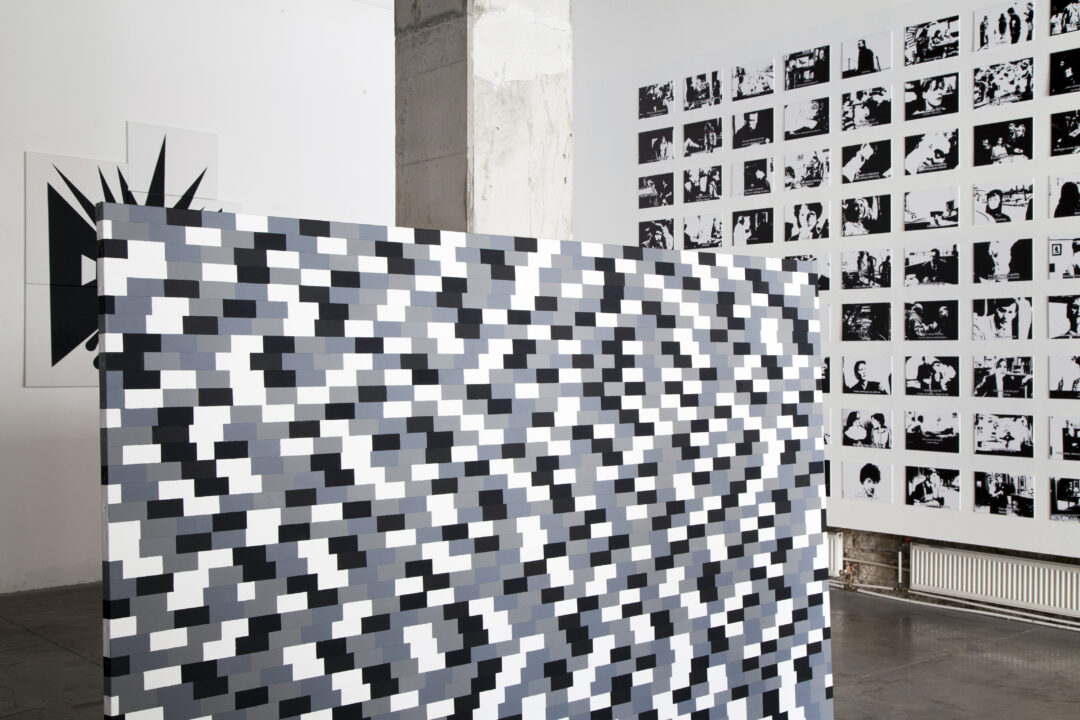
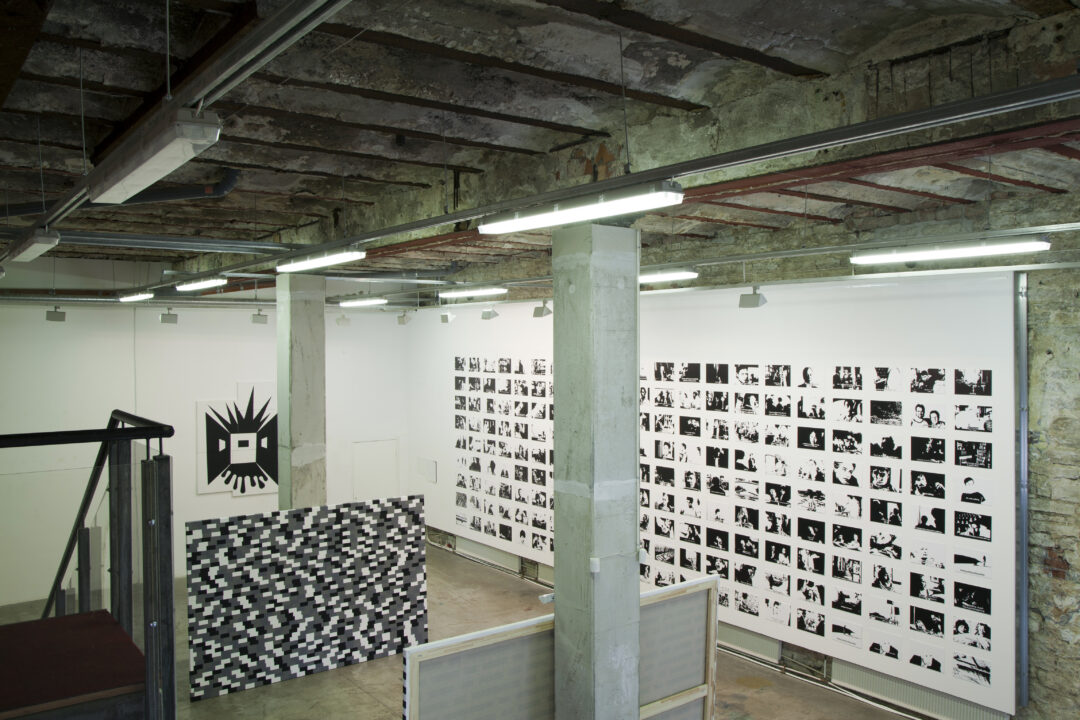
enter the untitled
exhibition views at vaal gallery
rhythm is rhythm
“rhythm is rhythm”—a rave without sound—is a work created for kumu’s rave exhibition. it is a spatial installation in which music played on vinyl records is translated into light.
an empty room, one of whose components is a dj booth with two turntables and a mixer, is filled with an intense lighting regime that branches outward into other rooms of the exhibition. the experiential core of the rave is evoked here through a lighting solution resembling a strobe effect. he work is at once a physically impactful environment and a commentary on rave culture
the tower
a tower constructed from bank code cards, consolidating the remnants of obsolete access systems and transforming them into a neutral geometric form
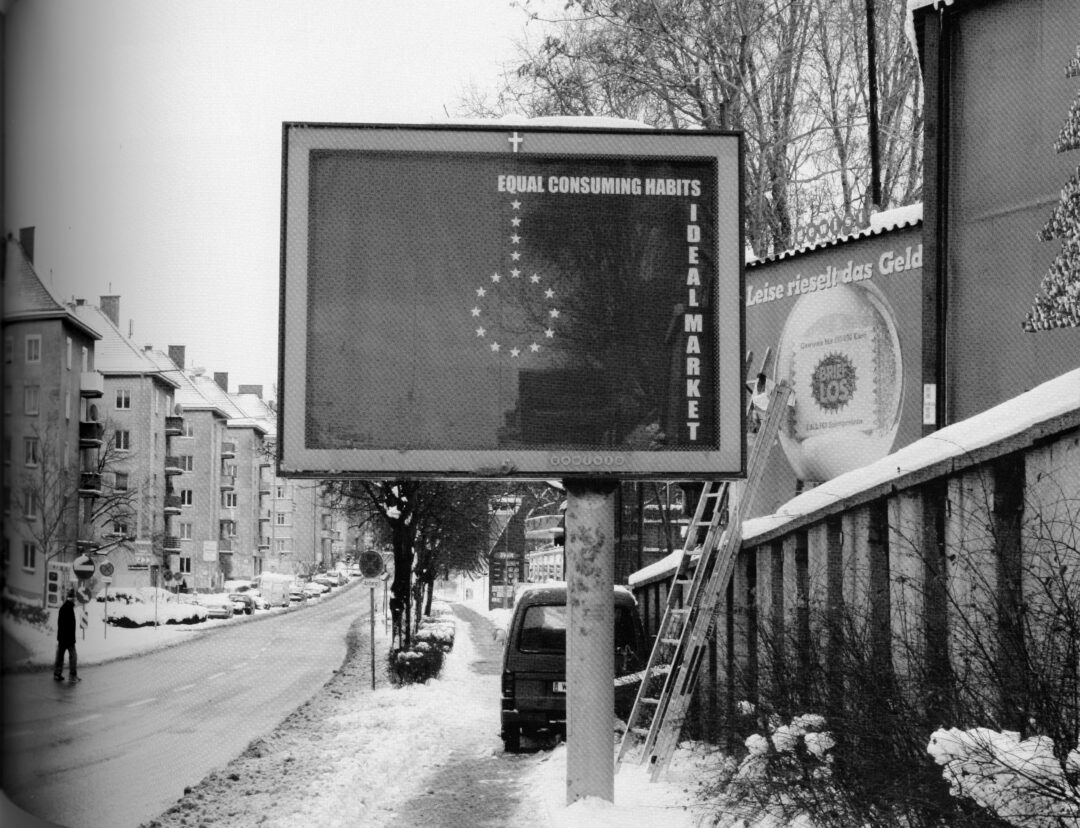
equal consuming habits
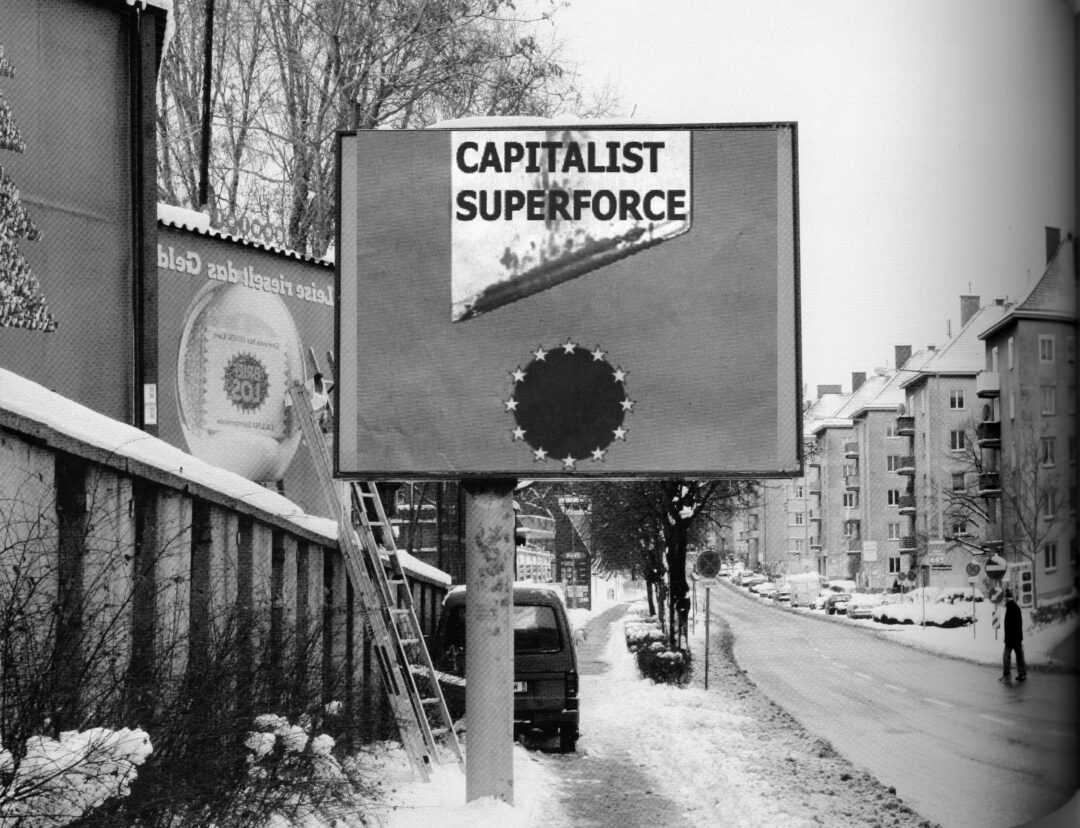
capitalist superforce